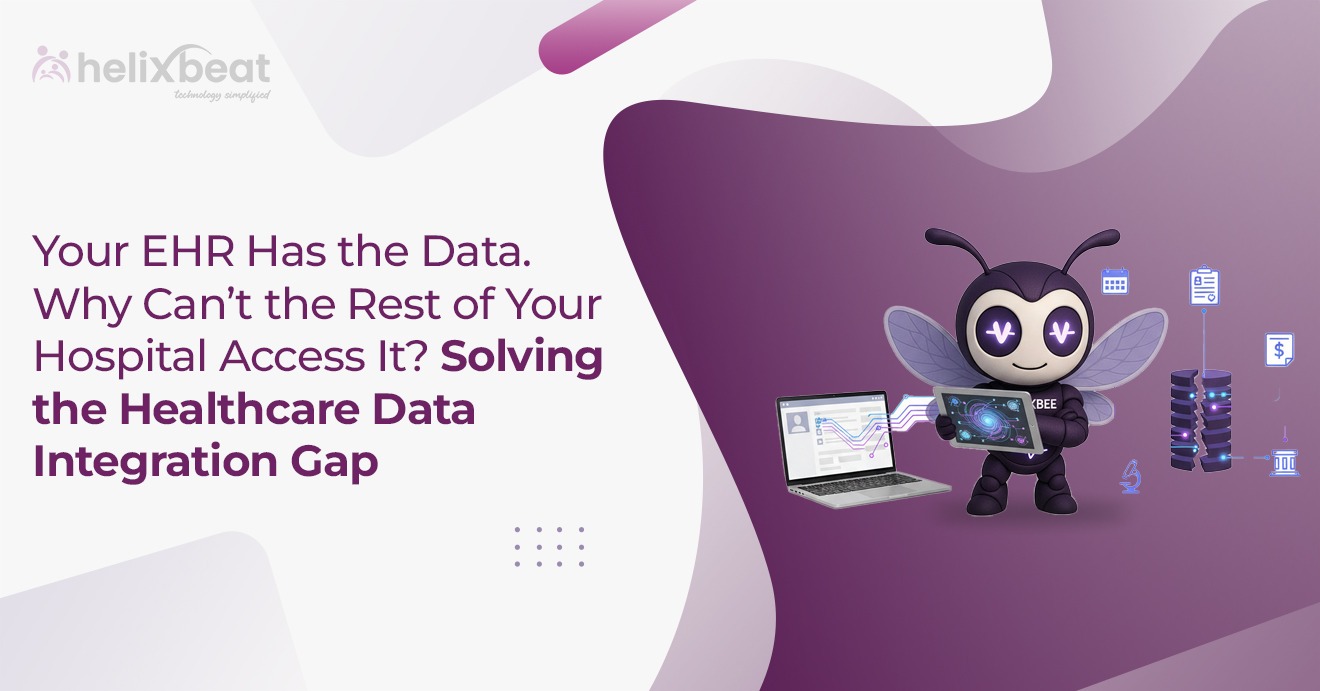


Imagine a patient walks into the ER with chest pain. Her cardiologist’s notes are in one system, her labs are in another, and her medication history is locked away in a clinic portal the hospital can’t even open. As a result, the ED team starts from zero.
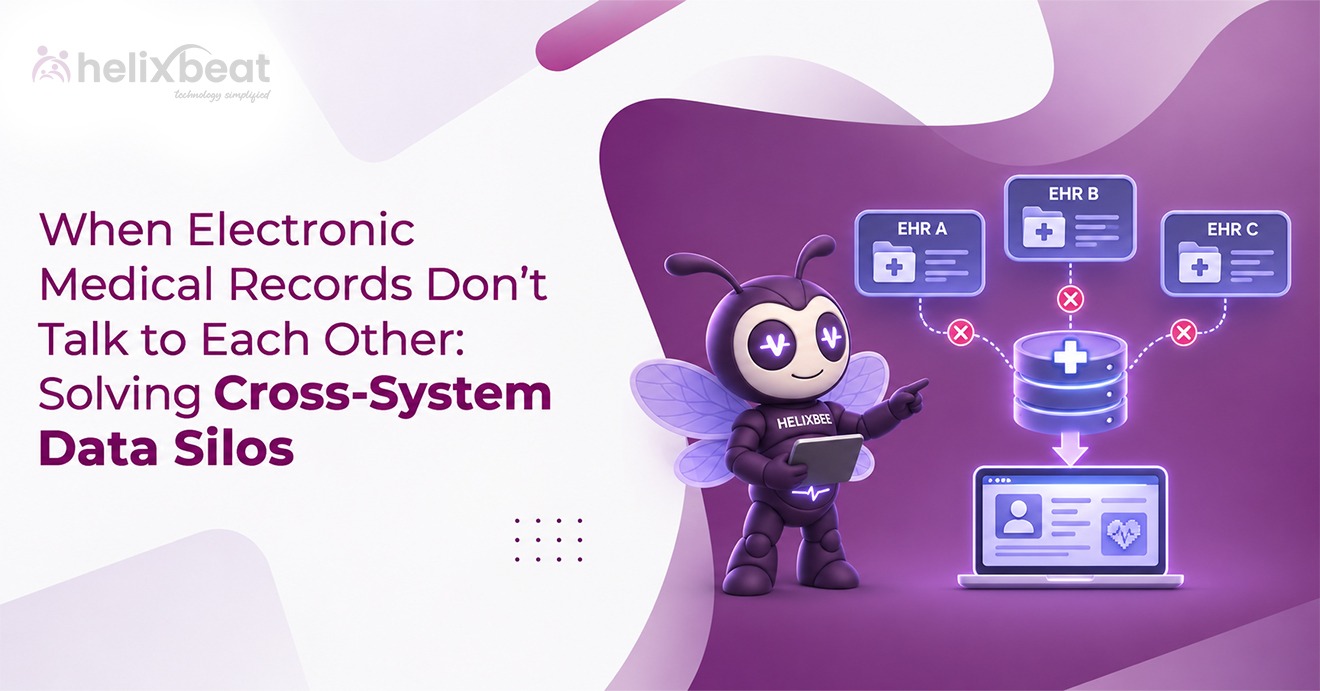
This is what happens when electronic medical records cannot exchange information. But the fix is rarely “buy a new system.” It is a blend of identity, standards, architecture, and governance work. In this guide, we show where exchange breaks and how to repair it.
Table of Contents
Why electronic medical records end up in silos?
An electronic medical record is the digital version of a patient’s chart within a single practice. An electronic health record (EHR) is the broader concept: a record designed to move across organizations, as HealthIT.gov describes it. Many electronic medical records were built for documentation and billing within one organization. Sharing was an afterthought.
Three forces widen the gap:
- Different data models. Since every vendor builds their own electronic medical record database, things get messy fast. One system logs a diagnosis with a standard code, another records it as free text, and a third uses custom codes that only their employees know.
- Uneven standards. HL7 v2 messages, which date to the late 1980s, remain widely used for hospital interfaces. C-CDA documents carry summary records. And FHIR, the newer API-based standard, keeps gaining ground. Yet two systems can both support FHIR and still populate different fields.
- Growth by acquisition. When a health system buys a practice, it inherits whatever electronic medical record system the old clinic was using.
What the gap costs?
Fragmented electronic medical records create friction at every step of care. Clinicians repeat tests because they cannot find past results. As a result, medication reconciliation turns into guesswork. Care coordinators chase faxes. Billing teams work from incomplete encounters. And patients retell their history at every door.
On top of that, regulation adds pressure. In the US, the 21st Century Cures Act information blocking rules bar providers, certified health IT developers, and health information networks from unreasonably interfering with access, exchange, or use of electronic health information. India’s Ayushman Bharat Digital Mission pushes in the same direction by building on ABHA health IDs and FHIR-based standards.
Four places where electronic medical records stop exchanging data
Moving electronic medical record data is not one problem. It is four.
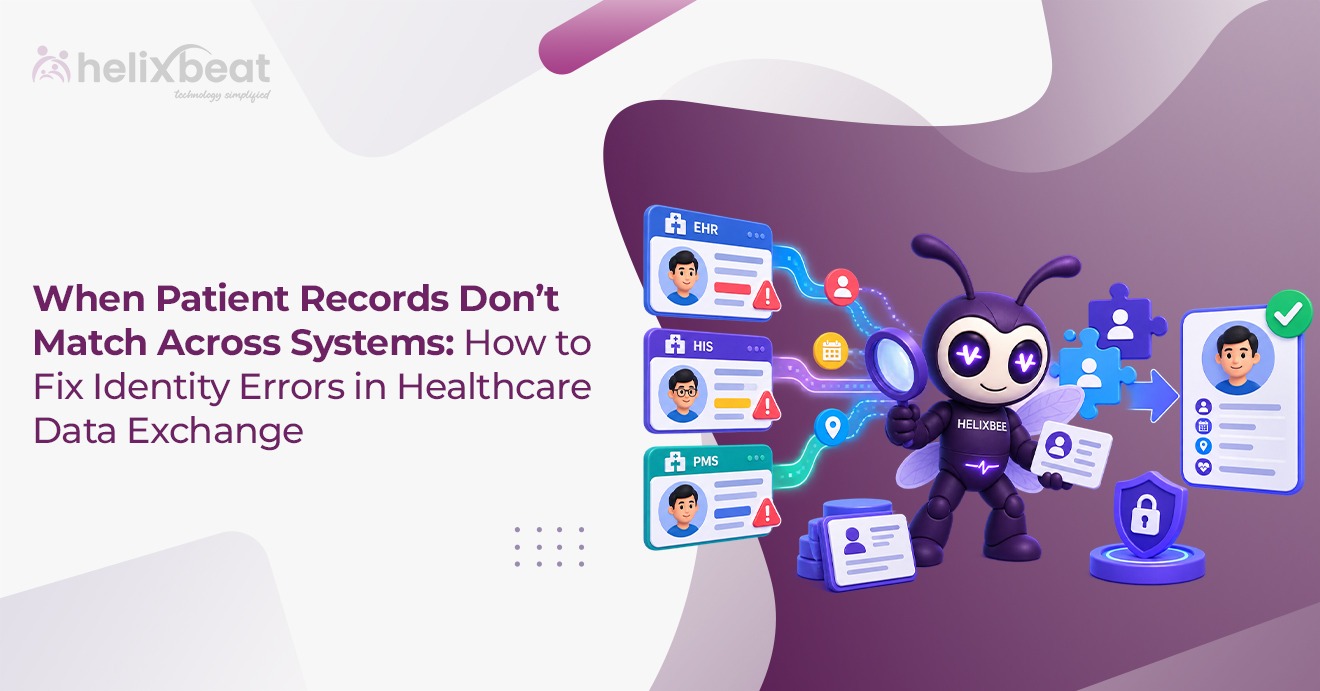
- Identity. Before electronic medical records can be shared, systems must agree on who the patient is. Since the US has no national unique patient identifier, organizations match names, birth dates, and addresses. Typos, nicknames, and name changes produce duplicates and false matches.
The fix: use an enterprise master patient index with probabilistic matching, standardize demographic capture at registration, and review match thresholds on a schedule.
- Meaning. Moving a field is not the same as preserving its meaning. For example, a lab result without units, or a medication without a coded form, may be unusable on arrival.
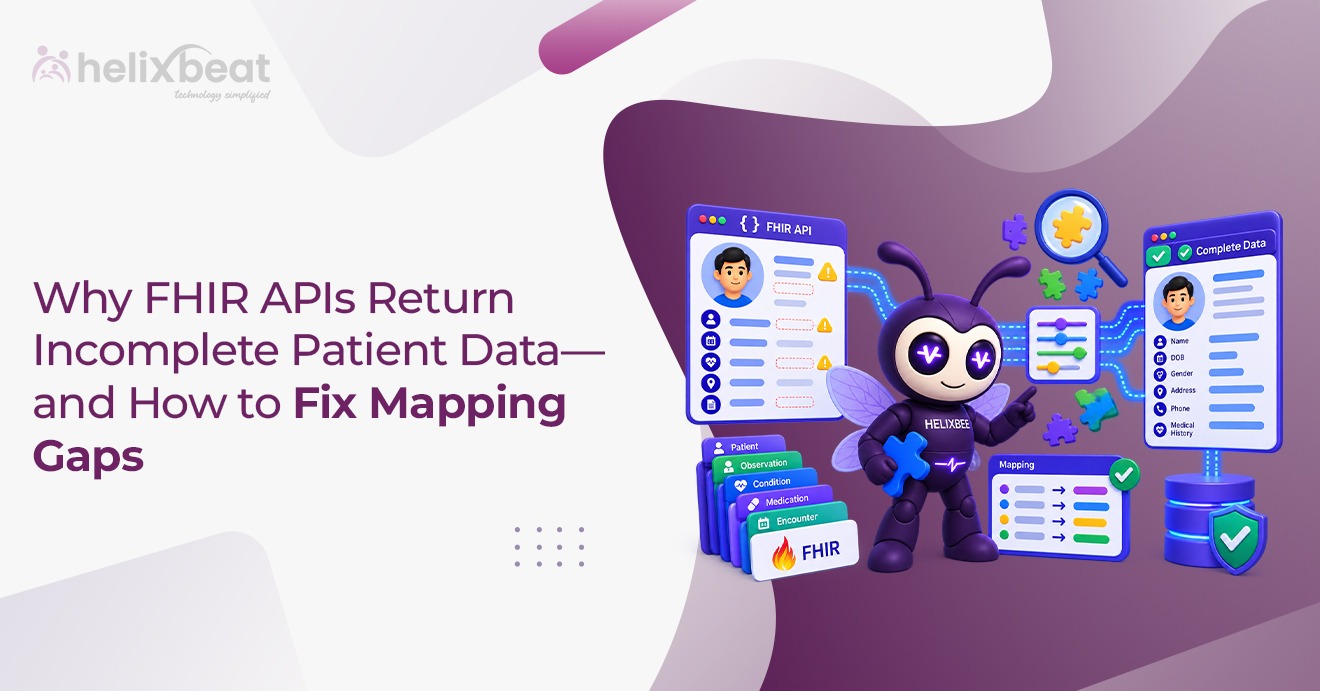
The fix: map local codes to shared terminologies, such as LOINC for lab tests, SNOMED CT for clinical concepts, and RxNorm for medications. Then have clinicians review the mapped output. Incomplete FHIR responses often trace back to mapping gaps, and this FHIR data mapping guide explains why.
- Connections. Point-to-point interfaces multiply fast. For instance, ten systems can need up to 45 separate connections. Each one needs its own build, testing, and maintenance.
The fix: put an integration layer in the middle, so each system connects once, and the hub handles translation and routing. Projects still stumble here. Read why EHR data integration projects fail before you scope yours.
- Trust. Clean data still stalls when organizations don’t know what they may disclose. HIPAA generally permits disclosures for treatment without patient authorization, yet many teams default to “no” out of caution.
The fix: write down consent rules, access roles, and audit logging up front. In the US, TEFCA gives participants a common set of rules, with designated QHINs acting as networks. That reduces the need to negotiate every agreement.
A practical roadmap
- Inventory every source. List each system that holds electronic medical records, along with its interfaces, data formats, and owner. Also include the legacy lab system nobody likes to discuss.
- Choose one clinical use case. Emergency visit summaries or discharge notifications work well. A narrow scope shows value fast and exposes problems while they are still cheap to fix.
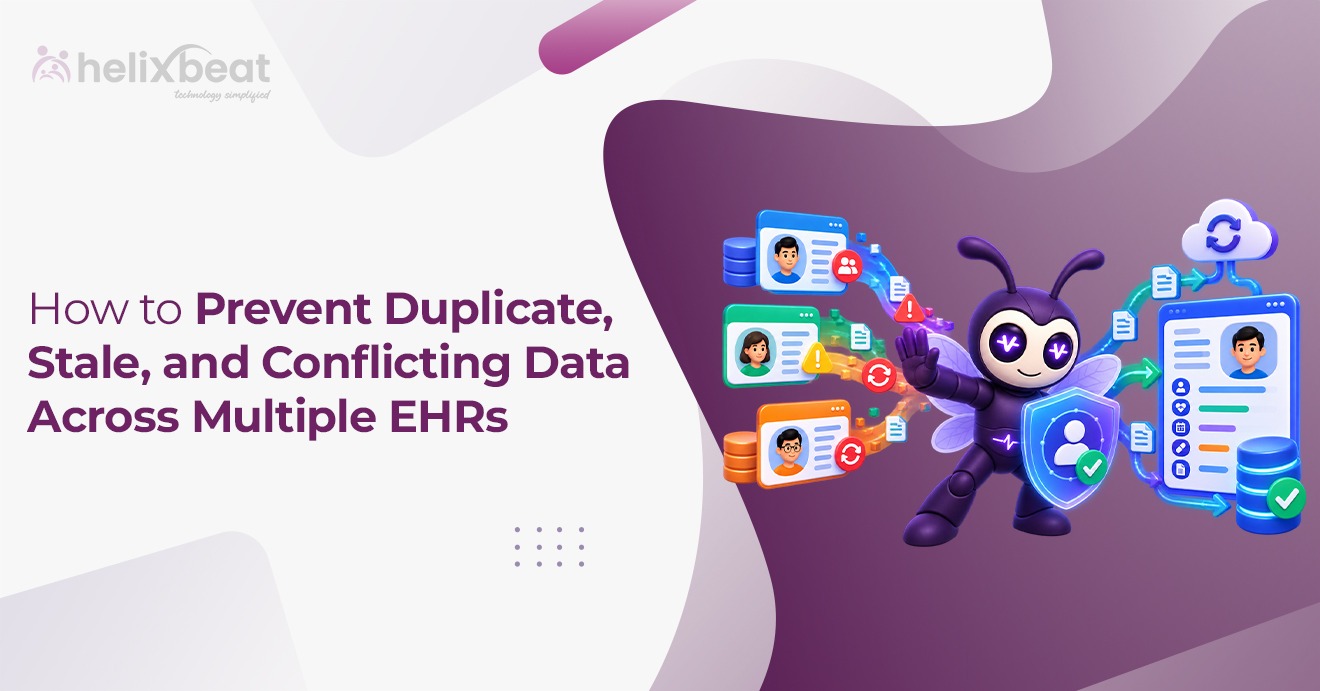
- Fix identity first. Exchange built on weak matching spreads errors faster. Our piece on duplicate and stale data shows what to clean first.
- Build on FHIR APIs and translate legacy feeds. Keep HL7 v2 and C-CDA sources running through a translation layer instead of rewriting them. AERIS supports real-time data sharing across disparate healthcare systems through event streaming and FHIR APIs.
- Measure what changes. Track duplicate rate, time to retrieve outside records, share of encounters with external data attached, and interface downtime. Downtime matters more than teams expect, as healthcare API reliability explains.
The takeaway
Silos in electronic medical records rarely come from one bad decision; they build up through years of local choices. That also means you can take them apart layer by layer. Therefore, start with identity, agree on meaning, connect once, and write down the rules.
Do not wait for a perfect enterprise plan. Pick one workflow where missing information hurts patients today, and prove the fix there. Then repeat it. Teams that connect electronic medical records one use case at a time tend to build trust, budget, and momentum together.
Contact us to explore how AERIS can support your healthcare interoperability goals.
FAQs
- What is the difference between electronic medical records and electronic health records?
An electronic medical record is the digital chart kept within a practice. But an electronic health record follows the patient across organizations.
- Why can’t electronic medical record systems share data by default?
Most were built around one organization’s documentation and billing needs. Vendors chose different data models, local codes, and interface methods. As a result, sharing requires extra mapping, matching, and agreements that nobody built in at the start.
- Which standards matter most for healthcare information exchange?
HL7 v2 for message feeds, C-CDA for summary documents, and FHIR for API-based access. For meaning, LOINC covers lab tests, SNOMED CT covers clinical concepts, and RxNorm covers medications.
- Is FHIR replacing HL7 v2?
Not fully. FHIR is growing, especially for APIs and apps. HL7 v2 remains widely used inside hospitals. Today, most organizations run both for years, which is why a translation layer like AERIS matters.
- Does HIPAA stop providers from sharing patient records?
Generally no. HIPAA permits disclosures for treatment without patient authorization. Some data types, such as substance use disorder treatment records covered by 42 CFR Part 2, and some state laws add extra requirements.