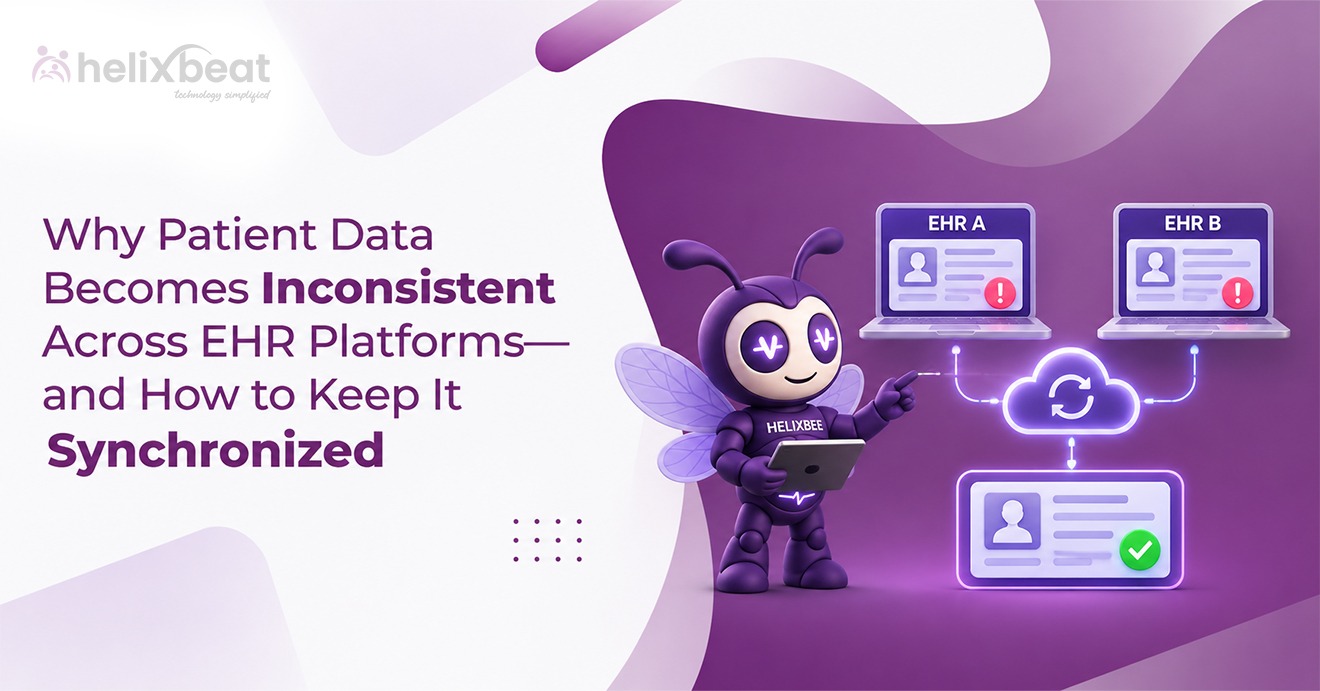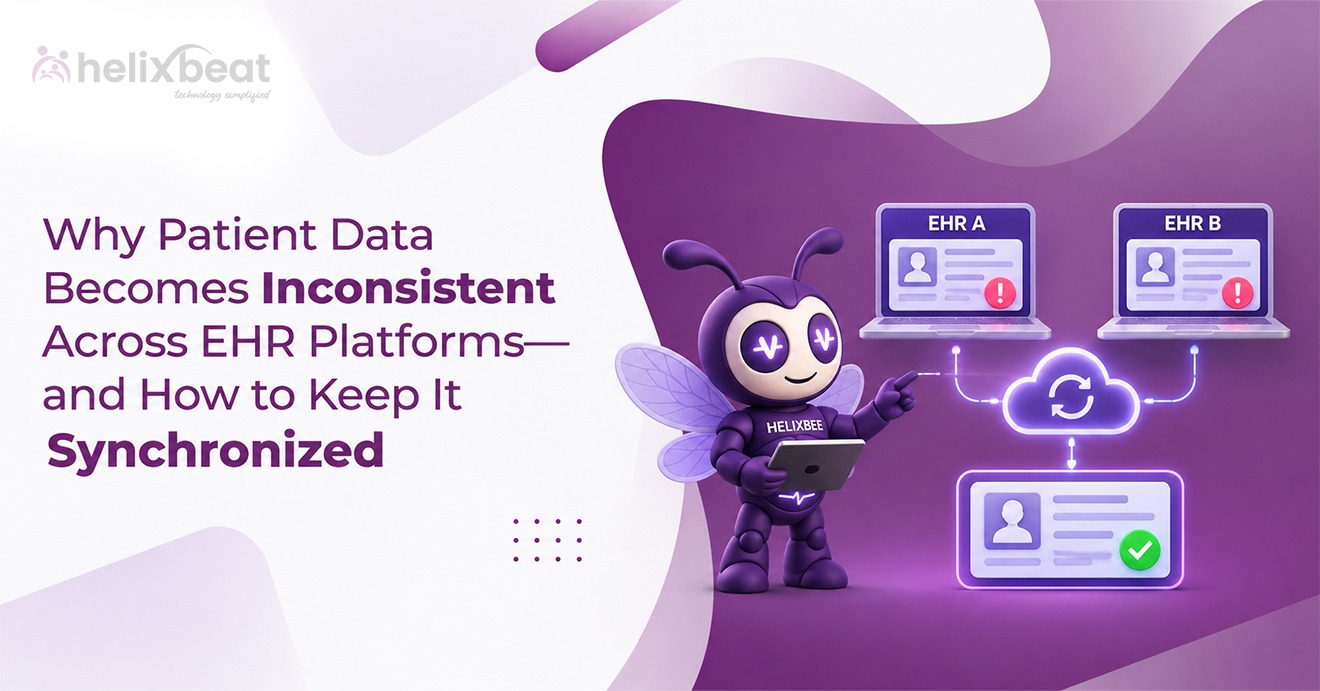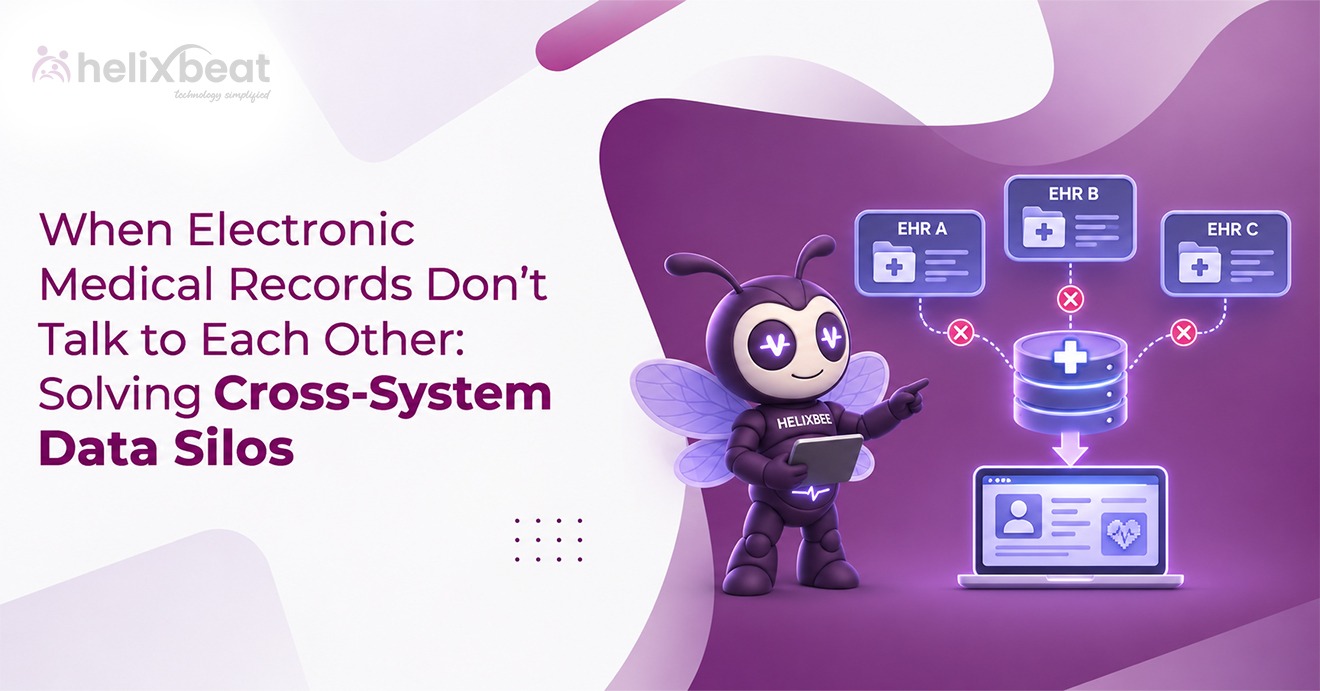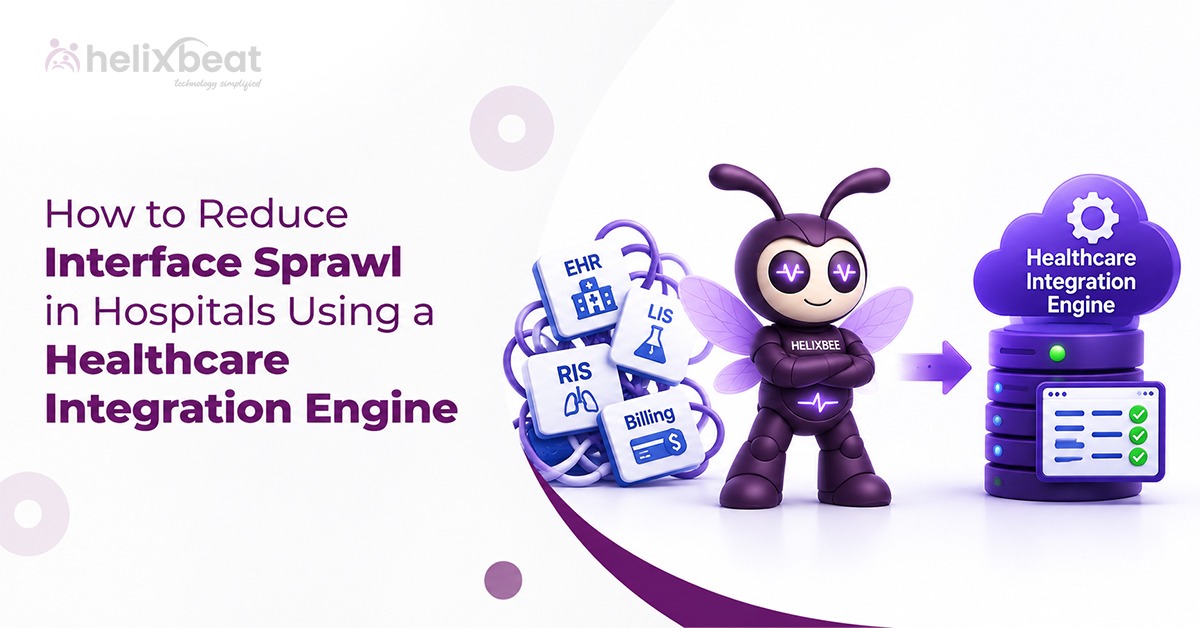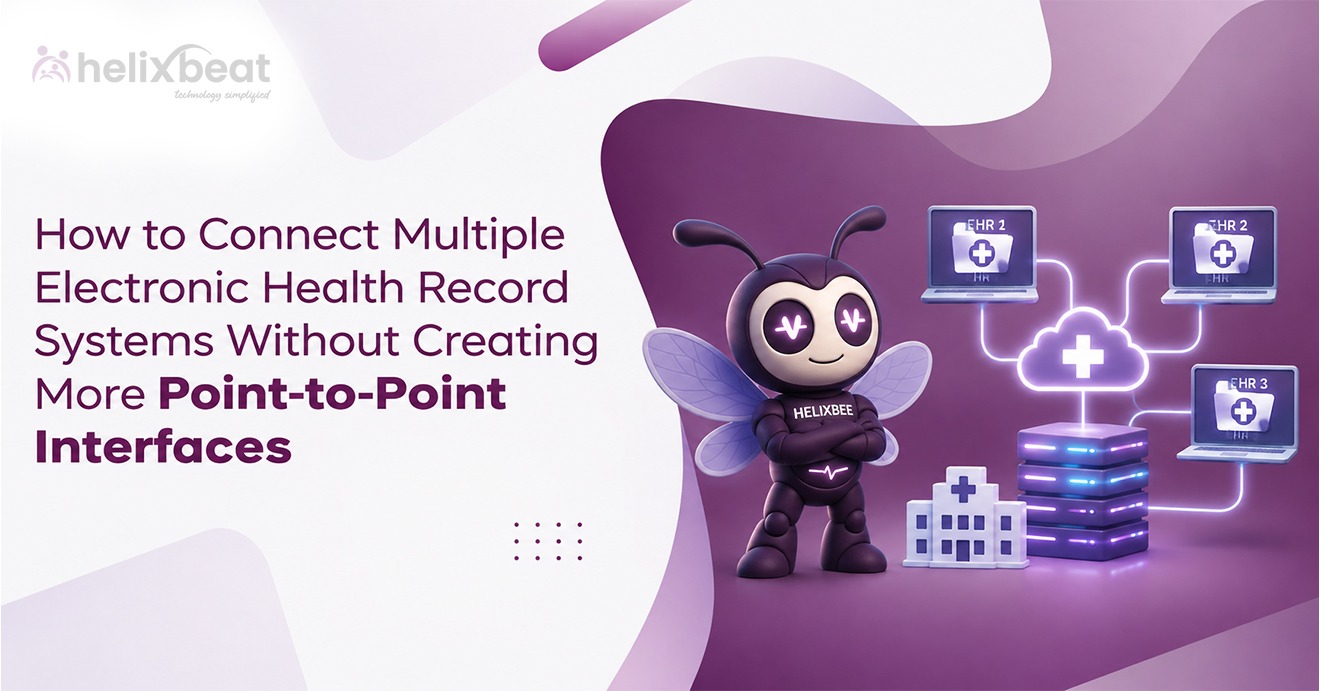


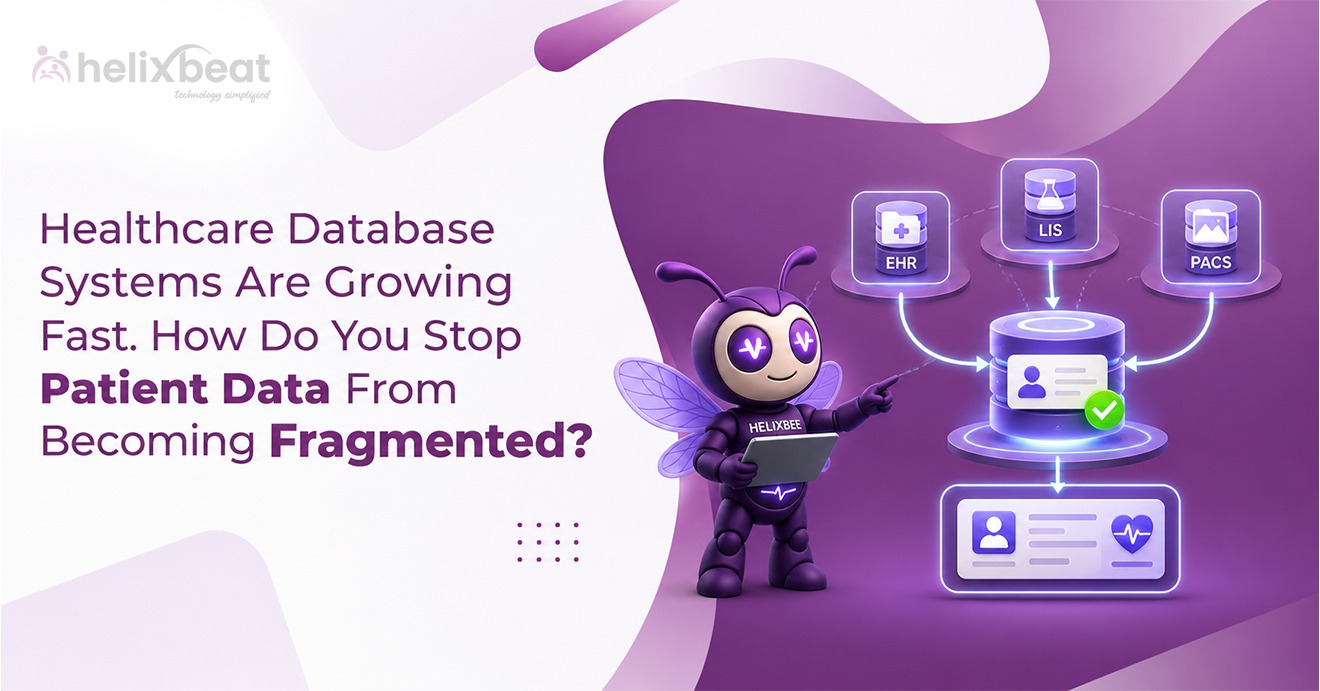
Ask a hospital CIO how many systems hold patient data, and you’ll get a pause. The EHR is one. The lab system is another. Add imaging, pharmacy, billing, the portal, remote monitoring, and whatever came with last year’s acquisition. Each is a database with its own idea of who the patient is.
That’s how fragmentation starts; not with one bad decision, but with many reasonable ones. Here is where it really comes from, and a sequence for stopping it.
Table of Contents
Fragmentation Is Not a Storage Problem
The first instinct is to buy more storage. But fragmentation is rarely about where data sits. It’s about whether the same patient, drug, or lab result means the same thing everywhere it appears.
Three kinds show up repeatedly:
- Identity fragmentation: one person, several records. Different MRNs, a married name, a typo in a birth date.
- Semantic fragmentation: one fact, several codes. One lab system sends local test codes while another uses LOINC.
- Structural fragmentation: incompatible formats, such as HL7 v2 messages, CDA documents, flat files, and proprietary tables.
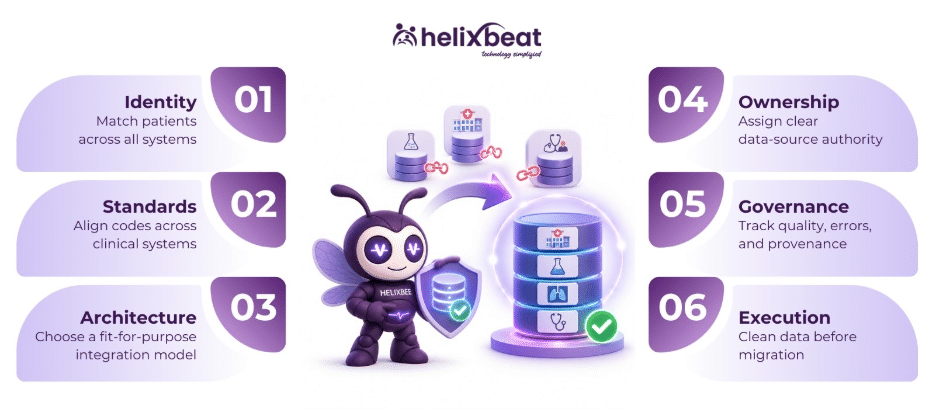
Fixing one doesn’t fix the others. Many projects start with structure and find the identity problem months later.
Step 1: Settle Identity Before Moving Any Data
Before you consolidate anything, decide how you will recognize a patient across your healthcare database systems. That is the job of an enterprise master patient index (EMPI). It assigns one enterprise identifier and keeps a cross-reference to every source-system MRN. Standards like the IHE PIX and PDQ profiles exist for this kind of lookup.
Matching usually blends two methods, and mature health data management programs use both. Deterministic matching applies exact rules, and probabilistic matching scores similarity across name, birth date, address, and phone. Borderline scores go to a human reviewer.
But here is the part many teams miss. The two possible errors are not equal. A missed match leaves a duplicate record. A false match creates an overlay, where two different people share one record. Overlays are usually the riskier error because a clinician may read someone else’s allergies. Therefore, set thresholds conservatively and route the gray zone to staff.
Step 2: Agree on a Common Language
While identity tells you who, terminology tells you what. And that’s where standard code sets help:
- LOINC for lab tests and clinical observations
- RxNorm for medications
- SNOMED CT for clinical findings and conditions
- ICD-10-CM for diagnoses in US billing
You don’t need to map everything at once. Rank your codes by frequency and start at the top. Our guide to healthcare data management and interoperability shows how code sets support consistent exchange.
Step 3: Choose an Architecture That Fits the Use Case
Three patterns dominate, and each has a trade-off.
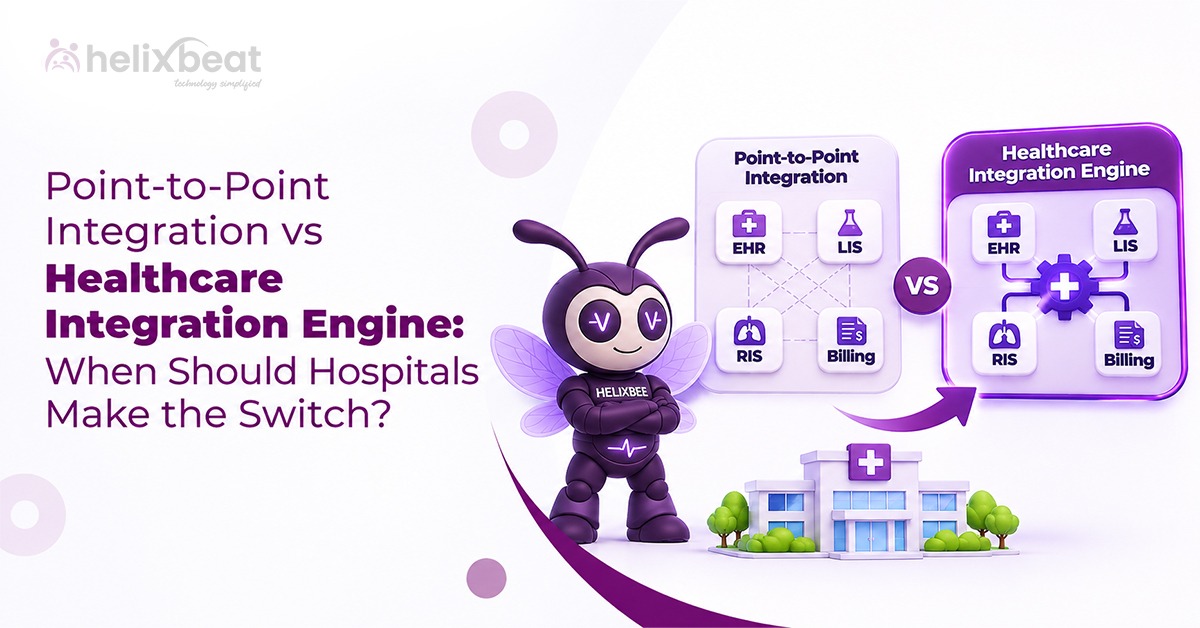
- Centralized repository. You copy data into one place. This suits analytics, but it adds a copy to secure and keep current.
- Federated access. You query sources on demand. There is less duplication, but performance depends on every source.
- Hybrid with a FHIR layer. You normalize data into FHIR resources and expose it through APIs. Whereas source systems stay as systems of record. In the US, certified EHRs must support standardized FHIR-based APIs.
If analytics is your main goal, lean toward a repository. If clinicians need a unified view at the point of care, lean toward federated or FHIR-based access. AERIS is built for that middle path.
Step 4: Treat Your EHR as One Source, Not the Source
Your electronic health records database captures clinical documentation well. But patient data also lives in lab, radiology, pharmacy, claims, and device sources.
Therefore, whatever you build, name a system of record for every major data element. For instance, allergies might belong to the EHR, or imaging reports might belong to radiology. Without ownership, two systems edit the same fact and drift apart.
Step 5: Govern It, Then Measure It
Governance sounds dull, yet it decides whether the work lasts. That’s why assign a data steward to each domain, like demographics, medications, and results. Then track a few numbers:
- Duplicate record rate
- Overlay incidents reported
- Share of lab results mapped to standard codes
- Interface error rate
- Time needed to onboard a new data source
Auditability matters too. The HIPAA Security Rule requires audit controls. FHIR also defines a Provenance resource that records where a piece of data came from and who changed it. Sound health data management depends on answering that question quickly.
Three Traps to Avoid
- Migrating dirty data. Clean duplicates before consolidating, or you copy the mess into a bigger container.
- Buying a platform first. Tools can’t set identity rules for you. Decide the rules, then pick the tool.
- Treating mergers as an IT afterthought. Acquisitions often cause sudden fragmentation. Add a data plan to due diligence.
A 30-Day Starting Plan
- Week 1: List every database that stores patient data and the identifiers it uses.
- Week 2: Sample one department and calculate its duplicate rate.
- Week 3: Rank your most-used lab and medication codes and check how many map to standards.
- Week 4: Pick one pilot domain, such as lab results, and one metric to improve.
That small loop gives you real numbers, which persuade budget committees better than a vision slide.
The Bottom Line
Healthcare database systems will keep multiplying as imaging, genomics, and home monitoring add sources. You can’t slow that down, but you can control how well those sources agree. Fix identity, standardize terminology, choose an architecture on purpose, and measure the results. Strong healthcare data management comes from those habits, not from any single product.
If you’re looking to improve data integration and interoperability, get in touch with us!
FAQs
- What causes patient data fragmentation?
Multiple EHRs and ancillary systems, mergers and acquisitions, inconsistent patient identifiers, and varying code sets are the usual causes. Incompatible data formats add to the problem.
- What is an enterprise master patient index?
An EMPI links records for the same person across multiple source systems. It assigns a unique enterprise identifier and cross-references the identifiers used in each source.
- What is the difference between a duplicate record and an overlay?
A duplicate means one patient has more than one record. An overlay means information from two different patients is stored in a single record. Overlays are generally considered the higher patient-safety risk.
- Should we centralize all patient data in one repository?
Not always. A central repository suits analytics. Clinicians who need a unified view at the point of care may be better served by federated or FHIR-based access. Many organizations use a hybrid.
- How does FHIR help reduce fragmentation?
FHIR provides a consistent resource model and REST-based APIs, so different systems can share data in a common structure. It does not fix poor identity matching or unmapped codes on its own